
The best of both worlds – a biocomposite alternative to plastic
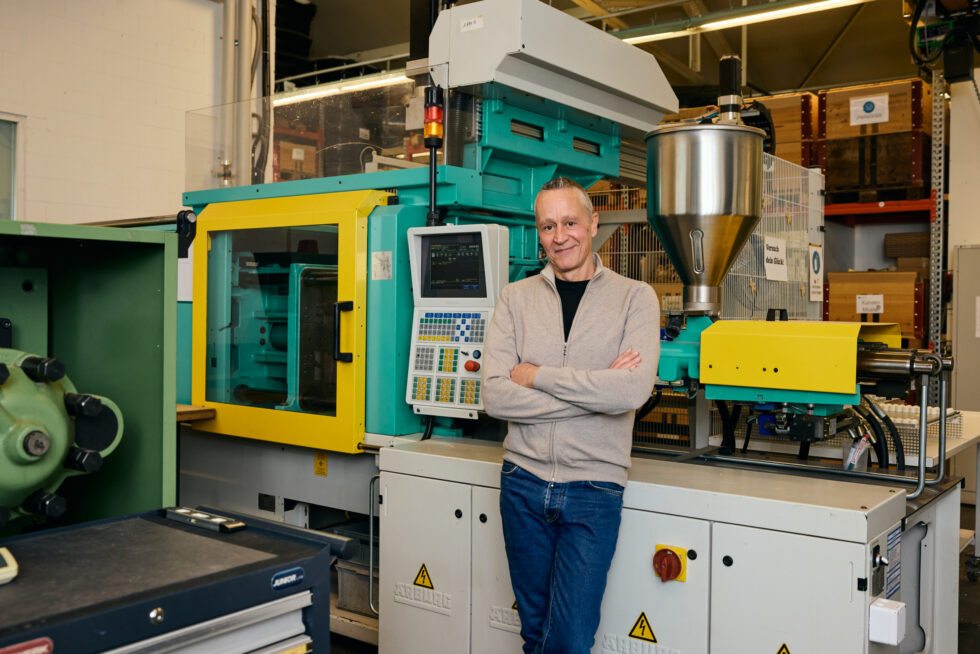
Beat Karrer, founder and CEO of FluidSolids AG, works with his team to turn organic by-products into alternatives to petroleum-based plastics.
FluidSolids turns organic by-products, including fibres left over from farming, food production and wood processing, into a material that can be processed like plastic. For manufacturers, that makes switching materials simpler. They can injection mould, extrude or thermoform it using the machinery they already have.
CEO Beat Karrer and his team spent years developing and patenting the material. The day-to-day demands of running a small technology company left little time for another question. How should FluidSolids position itself as the rules governing plastics continued to change?
“We knew our material fell outside the regulatory definition of plastic. That gives us a huge strategic advantage. To make the most of it, though, you need to know your way around the rules,” says Karrer.
When the opportunity to invest in an innovation project came up through Ahead, Karrer took it. He worked with Christian Bärtsch, a specialist in Ahead’s network, to develop a policy and lobbying strategy tailored to the European market.
“We already had the technology. What we needed was a clearer picture of who to talk to and how to make our case to each of them,” says Karrer.
Why the definition of plastic matters
Under the rules the team examined, common bioplastics such as PLA, PHA and PHB are still classified as plastics, despite the “bio” label. Depending on the product, that can mean extended producer responsibility (EPR) fees, marking requirements or product bans. The team found that the FluidSolids material falls outside these plastics-specific requirements. It consists of natural fibres held together by naturally occurring polymers that have not been chemically modified. This combination allows the material to be injection moulded.
“That’s a major advantage for our customers and for our own position in the market.”
Where the fibre and plastics industries meet
Bärtsch and the FluidSolids team mapped the trade associations and lobbying groups active in Brussels. The plastics industry generates €365 billion in turnover and has a powerful lobbying presence. The fibre industry, with turnover of €100 billion, has an extensive network of trade associations. For FluidSolids, whose material draws on both industries, there are potential allies in each.
“What we do complements both the fibre and plastics industries. We bring together the strengths of each without competing with either,” says Karrer.
Working with Bärtsch, the team refined how it talks about the material and planned how to approach regulators and trade associations.
Why companies hesitate to switch
Several million products made from the FluidSolids material have already been sold. To scale up internationally, the company is working with the Corvaglia Group, one of the world’s leading manufacturers of beverage closures. Its closure technology is used on around one in five PET soft drink bottles. For FluidSolids, the partnership demonstrates that its technology works on an industrial scale.
Even with that track record, winning customers takes time. Many companies are reluctant to change a business model that works, even when they know the regulations are going to change.
“The biggest hurdle we face with our material is hearing someone on the other side of the table say, ‘Let’s do nothing for now.’”
A plan for Brussels
The project produced a strategy covering four scenarios, with clear steps for putting it into practice. The technology is ready, the patents have been granted and the certifications are in place. FluidSolids now plans to speak to trade associations and policymakers about how its material is classified under EU rules.
“If we want a say in how those definitions are written, we need to be heard in Brussels. This project has given us a much clearer sense of how to position ourselves and who we should build alliances with.”
FluidSolids AG
Founded in 2011 by Beat Karrer, Zurich-based FluidSolids AG turns organic by-products into materials that can replace petroleum-based plastics.